Canker Sore and Cold Sore Treatment in Hamilton
Non-invasive, drug-free laser treatment that delivers fast pain relief and faster healing for canker sores and cold sores — safe for children and pregnant patients.
Canker sores and cold sores are both painful, and both interfere with eating, drinking, and talking — but they are two different conditions. We treat both using our Dentsply SiroLaser Advance diode laser, a non-invasive, drug-free chairside treatment that provides immediate pain relief and noticeably shortens how long the sore takes to heal. There are no needles, no cutting, and no medication involved, which makes the procedure safe to use on children and on pregnant patients. Most people walk out of a single short visit with the pain already gone. For cold sores, catching it early with the laser can also help future outbreaks come back smaller and less often.
- Dentsply SiroLaser Advance treatment for canker sores
- Dentsply SiroLaser Advance treatment for cold sores
- Canker sore and cold sore diagnosis and exam
- Topical pain relief and protective pastes
- Prescription steroid pastes for severe canker sores
- Antimicrobial mouth rinses
- Trigger identification (diet, toothpaste, stress)
- Smoothing sharp tooth or filling edges
- Recurrence prevention plan
- Referral for biopsy if a sore looks unusual
What is the treatment for canker sores and cold sores?
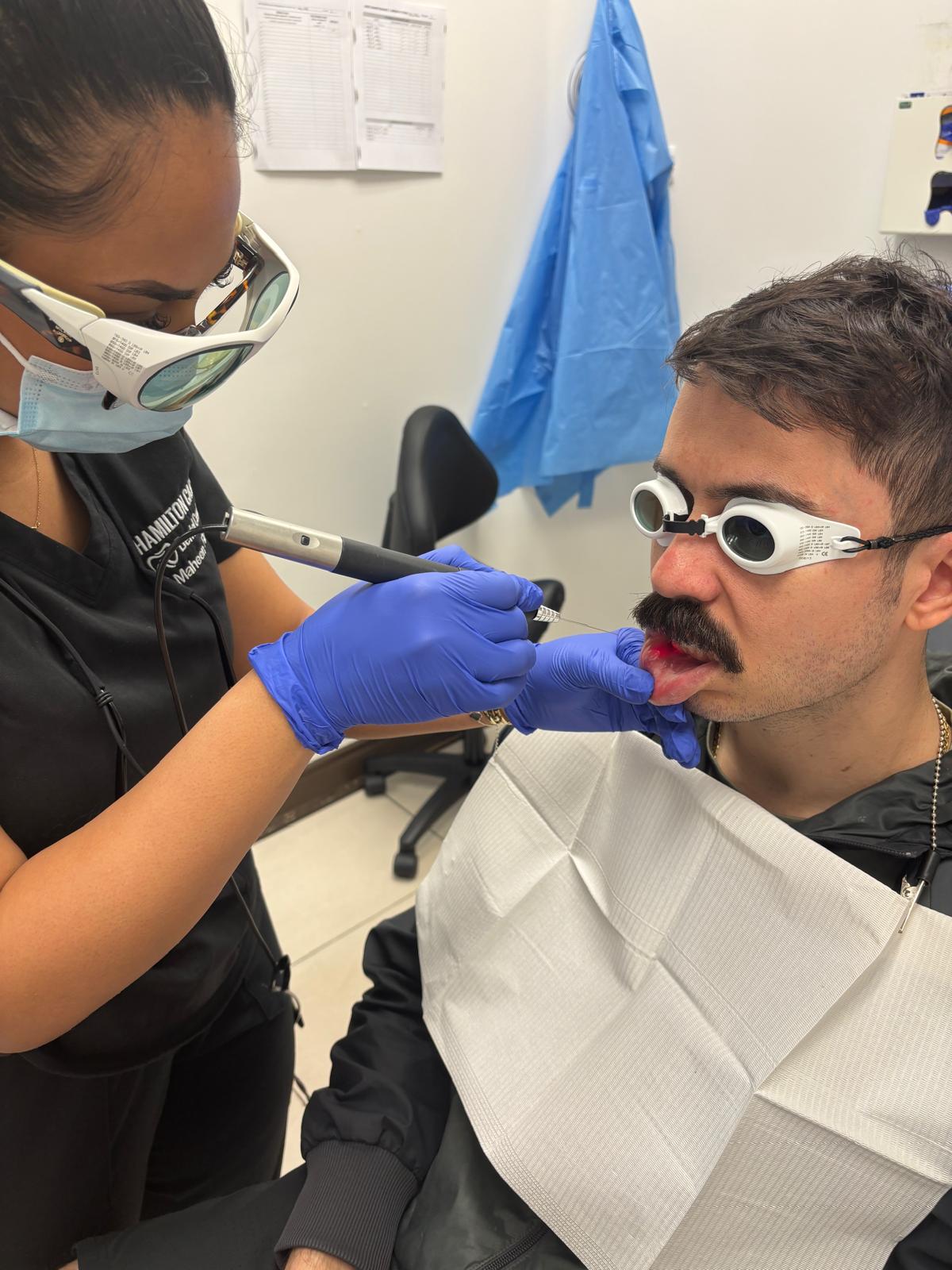
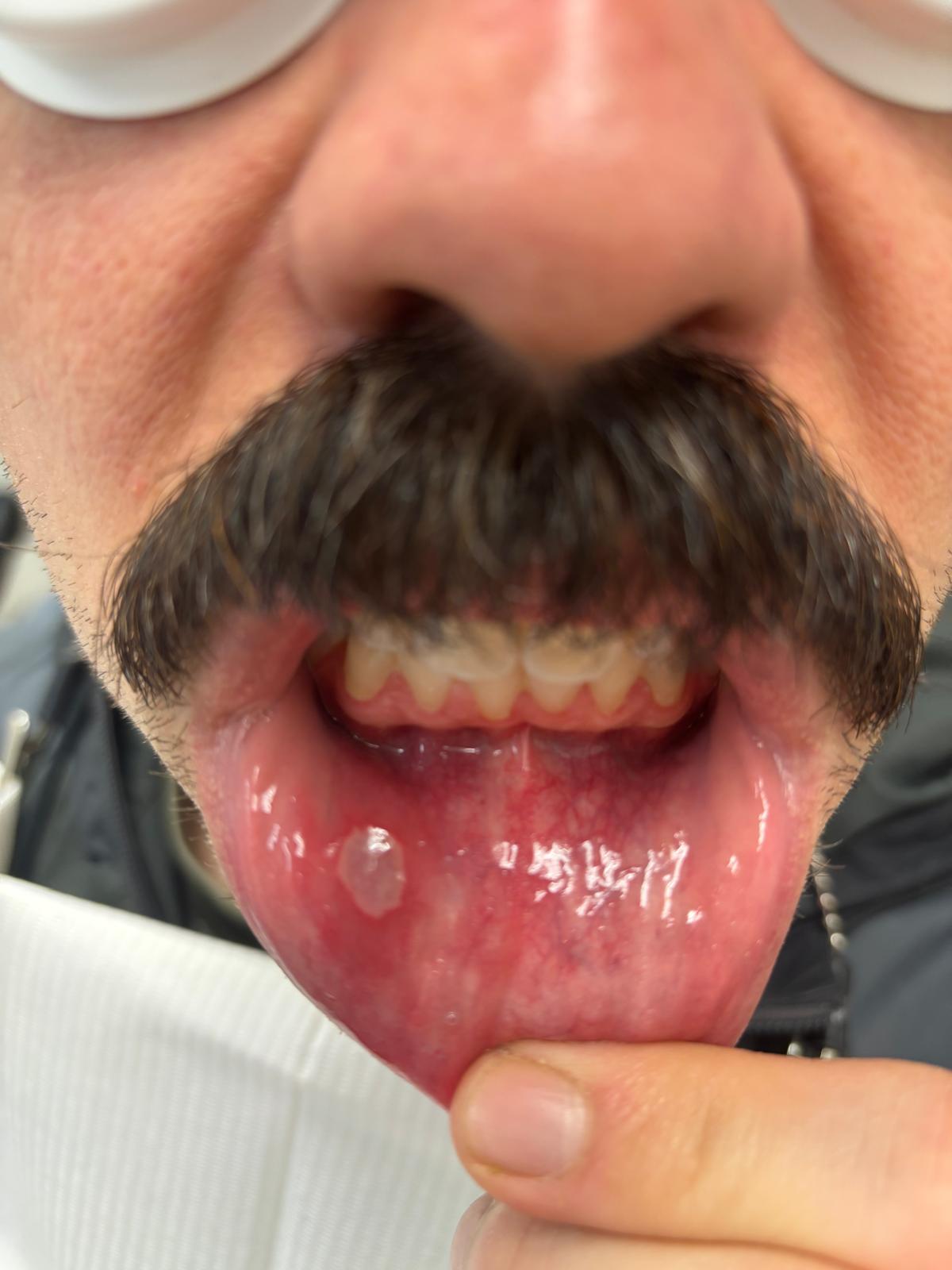
The treatment we use for both canker sores and cold sores is the Dentsply SiroLaser Advance, a soft-tissue diode laser applied directly to the sore in a short, no-contact session. There are no needles, no cutting, no anesthetic, and no medication, so it is drug-free and safe for children and for patients who are pregnant or breastfeeding. For a canker sore, the laser seals the surface of the ulcer, calms the inflammation, and eases the pain — most patients feel relief before they leave the chair, and the sore heals far faster than it would on its own. For a cold sore, the laser works best at the first tingle, before the blister forms: it dries the lesion and shortens the outbreak. Most visits take under thirty minutes.
Who canker sore and cold sore treatment is good for
- Patients with a painful canker sore that is interfering with eating or talking
- Patients with a cold sore on or around the lip — especially if caught early in the tingling or blister stage
- Patients with frequent recurring canker sores (more than three or four a year) or recurring cold sore outbreaks
- Children with painful canker sores — the laser treatment is non-invasive, drug-free, and well tolerated
- Pregnant or breastfeeding patients who want relief without steroid pastes or oral medications
- Children and teens with recurring mouth ulcers
- Patients whose canker sores last longer than two weeks
- Anyone with an unusually large sore (bigger than a centimetre) or a sore that keeps appearing in the same spot
- Patients whose canker sores started after switching to a new toothpaste or making a dietary change
What to expect
- Quick exam and history. We look at the sore, check the rest of your mouth, and confirm whether it is a canker sore, a cold sore, or something else. We ask about diet, stress, recent illness, toothpaste or product changes, and any pattern over the past year.
- Dentsply SiroLaser Advance treatment. We apply our diode laser to the sore for a short, comfortable session — no needles, no cutting, no anesthetic, and no medication. Because the procedure is non-invasive and drug-free, it is safe to use on children and on patients who are pregnant or breastfeeding. Most patients feel the pain ease before they leave the chair, and the sore typically heals noticeably faster than it would on its own.
- Trigger-based plan. For canker sores: if the cause is a sharp tooth, we smooth it; if it is SLS toothpaste, we switch you to an SLS-free option; if recurrence suggests a nutritional or systemic cause, we coordinate with your family doctor. For cold sores: we go over early-warning signs (tingling, itching) so you can come in at the prodromal stage next time, which is when laser treatment works best.
- Follow-up if needed. Most patients do not need a second visit. If a sore is not healing in two weeks, returns frequently, or looks atypical, we revisit the plan or refer for further investigation.
How the Dentsply SiroLaser Advance treatment works
The Dentsply SiroLaser Advance is a soft-tissue diode laser we use chairside for a range of procedures, including canker sore and cold sore treatment. The session is short, non-contact, and requires no needles, cutting, anesthetic, or medication — which is what makes it a non-invasive, drug-free option safe to use on children and on patients who are pregnant or breastfeeding. For a canker sore, the laser energy seals the surface of the ulcer, reduces inflammation, and disrupts the pain signal at the site — most patients feel the pain ease in the chair and find the sore noticeably less raw within hours. For a cold sore, the laser disrupts viral activity in the lesion, dries the blister, and significantly shortens how long the outbreak lasts. Treatment is most effective at the earliest stage of a cold sore — at the first tingle or itch, before the blister forms — so if you have recurrent cold sores it is worth calling us at the first warning sign rather than waiting.
What we actually do at the visit
A canker sore or cold sore visit is short. We start with a look at the sore itself and a quick check of the rest of your mouth so we are not missing a second one tucked under the tongue or behind a back molar. We ask about your toothpaste, your diet over the last week, your stress levels, any recent illness, and whether you have noticed a pattern over the last year. From there we offer one of a few things: the Dentsply SiroLaser Advance treatment for fast pain relief and accelerated healing, a topical anesthetic gel you can apply at home, a prescription steroid or protective paste for larger or more painful canker sores, or an antimicrobial mouth rinse if the area is at risk of secondary infection. If a sharp tooth or filling edge is irritating the same spot repeatedly, we smooth it on the spot. Most patients leave within thirty minutes with the pain already easing.
Identifying triggers so the sores stop coming back
The single most useful thing we can do for patients with recurring canker sores is figure out what is causing them. The most common culprits in our chair are: a toothpaste containing sodium lauryl sulfate (SLS), which is in many big-brand toothpastes and irritates the mucosa in susceptible people; a sharp edge on a tooth, filling, or crown that traumatizes the same area; citrus, tomato, pineapple, and vinegar-heavy meals; stress that has been going on for weeks; orthodontic appliances or aligner attachments that rub a specific spot; vitamin B12, iron, folate, or zinc deficiencies. When the pattern is clearly nutritional we coordinate with your family doctor. For recurrent cold sores, common triggers are sun exposure on the lips, stress, illness, fatigue, and hormonal shifts — knowing your personal trigger pattern helps you catch the next outbreak early enough for laser treatment to be most effective.
When a sore is not a canker sore or cold sore
Most mouth ulcers are simple canker sores and most lip lesions are cold sores. A small number are something else. A sore that does not heal in two weeks, that is larger than a centimetre, that has a hardened edge, that is on the lateral border of the tongue, or that keeps appearing in the same spot deserves a careful look. We perform an oral cancer screening at every checkup, and any sore that does not fit the canker-sore or cold-sore pattern is examined more thoroughly and, if needed, referred to a maxillofacial surgeon for biopsy. We do not do biopsies in-house. Catching an atypical lesion early matters, so do not put off a visit if a sore is behaving differently than what you are used to.
Home care that genuinely helps
While a sore heals, the goal is to reduce irritation and pain so it can run its course. For canker sores: rinse with warm salt water (a teaspoon of salt in a mug of warm water) two or three times a day, avoid the foods listed in the FAQ until it heals, and switch to a soft-bristle toothbrush. Over-the-counter products that can help in the short term include benzocaine-based gels (Anbesol, Orajel), Orabase protective paste, and antiseptic mouth rinses. For cold sores: keep the lesion clean and dry, avoid touching it (and wash your hands if you do), do not share drinks or utensils, and apply lip balm with SPF once the scab forms to protect the area as it heals. If the pain is interfering with sleep or hydration — or if you want it gone faster — call us and come in for laser treatment.
Frequently Asked Questions
How does the Dentsply SiroLaser Advance treat canker sores and cold sores?
The SiroLaser Advance is a soft-tissue diode laser. For canker sores it delivers low-level laser energy that seals the surface of the ulcer, reduces inflammation, and shuts down the pain almost immediately. For cold sores it disrupts viral activity, dries the lesion, and shortens healing time — especially effective when applied at the early tingling or blister stage. The treatment is brief, non-invasive, non-contact, requires no needles, no anesthetic, and no medication, and most patients describe it as painless.
Is the laser treatment safe for children or during pregnancy?
Yes. The Dentsply SiroLaser Advance treatment is non-invasive and drug-free — no needles, no anesthetic, no medication, and nothing absorbed into the bloodstream. That makes it a safe option for children with painful canker sores and for patients who are pregnant or breastfeeding and would prefer to avoid steroid pastes or oral medications. We will still review your medical history before treatment and tailor the approach to you.
How long do canker sores and cold sores take to heal?
Untreated, canker sores typically heal in seven to ten days (larger ones in two to three weeks) and cold sores in seven to fourteen days. With Dentsply SiroLaser Advance treatment, both usually heal in a fraction of that time and the pain often eases within hours. A canker sore that has not healed in two weeks should be looked at.
How is a canker sore different from a cold sore?
Canker sores appear inside the mouth (cheeks, lips, tongue, palate, floor of the mouth) and are not contagious — they are an immune-mediated ulcer. Cold sores appear on the lips or skin around the mouth and are caused by the herpes simplex virus (HSV-1), so they are contagious through close contact. The causes are different, but at our office we treat both with the same SiroLaser Advance laser protocol because both respond very well to it.
Can the dentist do anything to make these sores hurt less?
Yes. The fastest option is the Dentsply SiroLaser Advance, which usually relieves the pain in a single short visit. We can also apply a topical anesthetic for instant relief, prescribe a steroid or protective paste that shortens healing time, recommend an antimicrobial mouth rinse, and smooth any sharp tooth or filling edge causing repeated trauma.
Why do I keep getting canker sores?
Common triggers include accidental cheek bites, sharp tooth or filling edges, citrus and acidic foods, sodium lauryl sulfate (SLS) toothpastes, stress, hormonal shifts, and vitamin B12 or iron deficiencies. Identifying which trigger applies to you usually lowers how often the sores come back.
Are canker sores contagious? What about cold sores?
Canker sores are not contagious — they do not spread by sharing utensils, kissing, or close contact. Cold sores are contagious, especially when the blister is open or weeping; avoid kissing, sharing drinks, and touching the sore while it is active.
When should a canker sore or cold sore be checked by a dentist?
For cold sores, the best time to come in is at the first tingle, before the blister forms — laser treatment works best at this stage. For canker sores, book a visit if a sore lasts longer than two weeks, is larger than a centimetre, keeps appearing in the same spot, is associated with a fever or feeling unwell, or is unusually painful. Persistent or atypical sores should always be evaluated to rule out other conditions.
Should I avoid certain foods when I have a canker sore?
Yes, until it heals. Skip citrus juice, tomato sauce, pineapple, vinegar, very salty snacks, sharp chips, and spicy food. Cool soft foods (yogurt, smoothies without a straw, mashed potatoes) are easier and faster to eat.
Are canker sore and cold sore visits covered by insurance?
An exam to diagnose and treat an oral lesion is typically covered by most private dental insurance plans, and we provide direct insurance billing if applicable. CDCP also covers examination and basic treatment for eligible patients. Laser treatment coverage varies by plan — we will confirm before treatment begins.